Tensorium Tensorium

How to Choose an Edge AI Server Manufacturer in 2026?

Time:2026-09-19 Author:Amelia
0%

Choosing an edge AI server manufacturer in 2026 requires more than comparing processor names or advertised inference speeds. Edge deployments operate in difficult places: factory floors, retail back rooms, roadside cabinets, hospitals, and remote energy sites. A reliable vendor must deliver consistent performance when space, power, cooling, and network access are limited.

Jensen Huang, founder and CEO of NVIDIA, has said, “AI is a new computing model.” That statement matters when evaluating an edge AI server manufacturer. The right partner should support the complete computing environment, not only sell powerful hardware. Examine GPU and CPU options, memory capacity, thermal design, cybersecurity controls, remote management, software compatibility, and long-term component availability. Ask for measured latency under realistic workloads. A laboratory benchmark may look impressive. Your camera streams may behave differently.

Experience often reveals what brochures omit. Check how the manufacturer handles firmware updates, failed components, field repairs, and warranty claims. Request deployment references from similar industries. Inspect the chassis, airflow paths, mounting system, and cable access. Small design decisions can affect maintenance time.

No shortlist is perfect. A cheaper server may consume more electricity or require frequent intervention. A premium system may exceed the actual workload. Procurement teams should also question vague claims about “real-time” performance and “industrial-grade” reliability. In 2026, trust will come from transparent testing, documented support, and measurable lifecycle value. The best edge AI server manufacturer is not necessarily the largest. It is the partner that remains accountable after installation.
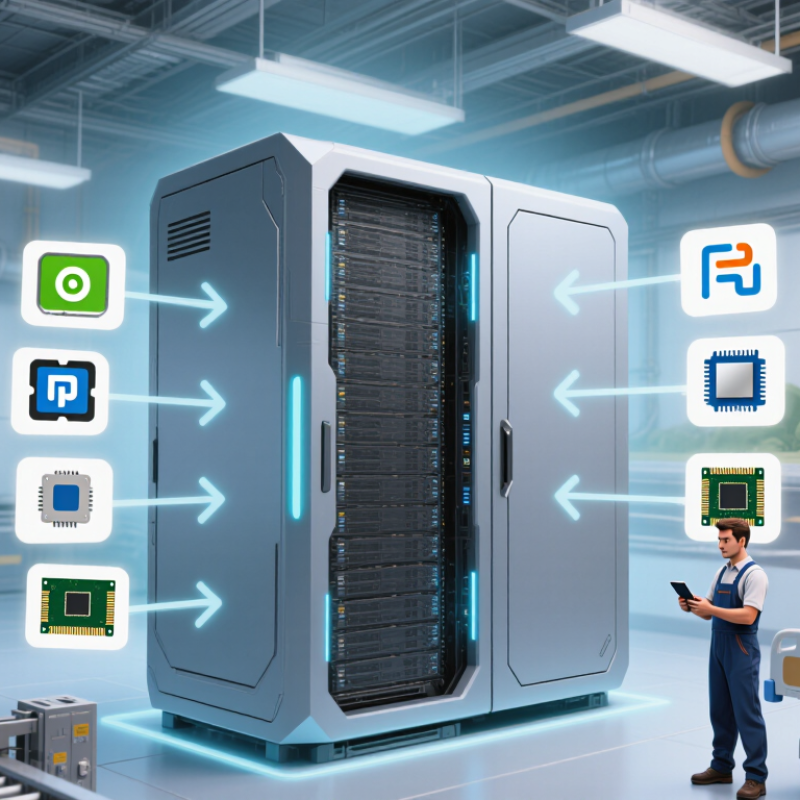
How to Choose an Edge AI Server Manufacturer in 2026?

Define Edge AI Workloads: Gartner Forecasts 75% of Data at the Edge

As edge computing expands, server selection must begin with workload definition, not hardware catalogs. Gartner forecasts that 75% of enterprise-generated data will be created and processed at the edge by 2025. In 2026, that trend remains highly relevant for manufacturers and buyers. This shift changes practical requirements. A factory may need instant vision inference beside a production line. A hospital may require strict latency, local data retention, and predictable availability. A remote site may prioritize low power and offline operation. Different workloads need different servers.

Before comparing manufacturers, record model size, camera streams, response time, operating temperature, and expected growth. Test real workloads with representative data. Paper specifications can mislead. Ask whether the manufacturer provides clear benchmarks, long-term firmware support, secure boot, signed updates, and hardware lifecycle policies. Confirm support for containerized deployment, remote monitoring, and recovery after network failure. These details show engineering maturity more clearly than peak performance numbers.

Experience also matters. Request deployment references from similar environments, then verify them independently. Examine warranty terms, spare-part access, repair time, and documentation quality. A lower purchase price can become expensive when one failed server stops local decisions. Reliability is never absolute. Even strong designs may overheat, drift, or require unexpected maintenance. Leave headroom for thermal load and model updates, while measuring power use during peak inference. The right manufacturer matches measurable edge demands with accountable support.

Benchmark Latency and TOPS with MLPerf Inference, Not Vendor Claims

Choosing an edge AI server manufacturer in 2026 requires measured evidence, not impressive sales claims. IDC forecasts global edge computing spending to reach about $232 billion in 2024, with continued growth through 2028. That expansion makes procurement mistakes expensive. A high TOPS figure may look attractive, yet it says little about application latency, power use, or sustained performance.

Use MLPerf Inference results as a common reference point. Compare the same workload, precision, batch size, and latency target across manufacturers. For a retail camera, measure 99th-percentile response time, not only average latency. For a factory controller, record results under thermal throttling and network interruptions. MLPerf’s closed and open divisions also help separate standardized testing from customized configurations. Numbers expose trade-offs.

TOPS should remain a supporting metric. A server rated at 400 TOPS can perform poorly if memory bandwidth limits model execution. Check throughput per watt, idle consumption, cooling requirements, and software support for quantized models. The Uptime Institute’s 2024 data-center research continues to highlight rising power and cooling pressures, which edge sites often handle with fewer resources. I would request raw logs, test scripts, and repeat runs. Vendor-selected settings can still distort comparisons. My own evaluation would include a 24-hour workload, because a short benchmark may hide performance drops.

Verify Software Longevity: IDC Projects $632B in AI Spending by 2028

How to Choose an Edge AI Server Manufacturer in 2026?

IDC projects global AI spending could reach $632 billion by 2028. That figure changes how buyers should assess edge AI servers. Hardware speed matters, but software longevity may determine the real return. A powerful server becomes expensive when its drivers, operating system, or AI frameworks stop receiving updates.

Ask the manufacturer for a written support roadmap. Check the expected update period, security patch frequency, firmware process, and compatibility with major inference frameworks. Confirm whether container images can move between server generations. Also examine remote monitoring, rollback tools, and documentation quality. These details matter in a factory cabinet, where physical access may be limited and downtime can affect production.

A practical test should run your own models, not only a polished demonstration. Measure latency, power use, thermal performance, and recovery after a failed update. Request references from deployments with similar conditions. A vague answer is useful evidence too. It may reveal weak planning.

Do not ignore hidden costs. Older software can require custom fixes, retraining, or specialist engineers. My evaluation habit would be to score five-year support, not first-year performance. That approach is imperfect, because projections can change. Still, a clear lifecycle policy offers stronger protection than impressive specifications alone. Keep every promise in writing.

How to Choose an Edge AI Server Manufacturer in 2026?

Verify Software Longevity: Global AI Spending Is Projected to Reach $632 Billion by 2028

Global AI spending is projected to grow from approximately $235 billion in 2024 to $632 billion in 2028. This expansion increases the importance of long-term software support, security updates, driver compatibility, and lifecycle stability when evaluating edge AI server solutions.

Source: Published industry forecast; values shown in USD billions.

Audit Security and Manageability Against NIST Zero Trust and ISO 27001

How to Choose an Edge AI Server Manufacturer in 2026?

Security evidence matters more than impressive benchmark scores. An edge AI server can process cameras, sensors, and sensitive operational data outside the central data center. NIST SP 800-207 requires continuous verification, least-privilege access, and strong device identity. Ask manufacturers for documented boot security, signed firmware, hardware-rooted keys, and remote attestation. These controls should support every device, user, workload, and connection.

Manageability is equally important. ISO/IEC 27001 expects controlled assets, access rights, incident response, and continual improvement. Request a live demonstration of fleet enrollment, certificate rotation, patch approval, rollback, and audit-log export. Logs should show who changed firmware, when, and on which server. The IBM Cost of a Data Breach Report 2024 recorded an average global breach cost of 4.88 million dollars. That figure makes weak remote administration difficult to justify. The Verizon 2025 Data Breach Investigations Report also identified vulnerability exploitation as a major initial access route. Security cannot remain an unchecked box.

Tips: Build a five-server pilot. Disconnect one device during testing. Measure recovery time. Check whether logs remain readable after updates. Ask for ISO 27001 certification scope, not just the certificate. Compare it with NIST control mappings. A polished dashboard may hide operational gaps. I would also score support response times, because a secure design still fails when nobody answers at 2 a.m. Expect some uncertainty. Require evidence, repeat tests, and record every exception.

Compare TCO, Power, and Support Across Three-Year Edge Deployments

How to Choose an Edge AI Server Manufacturer in 2026?

Compare TCO, Power, and Support Across Three-Year Edge Deployments

Choosing an edge AI server manufacturer requires more than comparing purchase prices. Build a three-year TCO model before reviewing technical specifications. Include hardware, deployment labor, network upgrades, software licensing, maintenance, and replacement parts. Measure the real load. Peak wattage can hide the cost of continuous inference beside factory machines, cameras, or retail systems. Multiply average power by operating hours, local electricity rates, and cooling demand. A server drawing 900 watts continuously may cost far more than a cheaper unit with better efficiency.

Ask manufacturers for measured performance under your workload. Use realistic video streams, model sizes, and ambient temperatures. Request idle, typical, and maximum power figures. Thermal throttling can reduce performance and increase energy waste. Rack density matters too. A compact system may lower facility costs, but restricted airflow can create new service problems.

Support deserves equal attention across the full deployment. Check response times, on-site repair coverage, spare-part availability, firmware policies, and security update periods. Remote diagnostics can reduce travel and downtime, especially across many locations. However, service promises need written service-level terms. One uncomfortable lesson from field evaluations is that optimistic downtime assumptions distort TCO quickly. Test a failure process before signing. Disconnect a power supply, simulate storage loss, and measure how long recovery actually takes. Support changes everything.

How to Choose an Edge AI Server Manufacturer in 2026? - Compare TCO, Power, and Support Across Three-Year Edge Deployments

Three-year comparison of representative edge AI server configurations
Evaluation Dimension Compact Edge Inference Node Accelerated 1U Edge Server High-Capacity 2U Edge Server
Typical Deployment Profile Retail sites, light industrial inspection, gateways, and small remote locations Multi-camera analytics, robotics cells, transportation hubs, and regional sites Large computer-vision workloads, centralized factory zones, and high-density inference
Recommended Workload Scale Up to 8 concurrent 1080p video streams, depending on model complexity and frame rate Approximately 16–32 concurrent 1080p video streams, depending on accelerator selection Approximately 32–64 concurrent 1080p video streams, depending on model complexity and thermal limits
Installed Compute Profile 8–16 CPU cores, 32–64 GB ECC memory, 1 local AI accelerator, 1–2 TB SSD 16–32 CPU cores, 64–128 GB ECC memory, 1–2 AI accelerators, 2–4 TB SSD 32–64 CPU cores, 128–256 GB ECC memory, 2–4 AI accelerators, 4–8 TB SSD
Typical Continuous Power Draw 65 W average 220 W average 450 W average
Three-Year Electricity Cost US$171
Based on 65 W × 24 hours × 365 days × 3 years at US$0.12/kWh
US$579
Based on 220 W × 24 hours × 365 days × 3 years at US$0.12/kWh
US$1,185
Based on 450 W × 24 hours × 365 days × 3 years at US$0.12/kWh
Cooling and Power-Infrastructure Impact Low; commonly suitable for standard branch electrical circuits and passive or low-noise cooling Medium; requires planned airflow and rack or cabinet ventilation High; requires careful rack airflow, heat removal, and power-distribution planning
Indicative Hardware Acquisition Cost US$1,800
Configuration-level planning estimate excluding installation and taxes
US$5,200
Configuration-level planning estimate excluding installation and taxes
US$9,800
Configuration-level planning estimate excluding installation and taxes
Three-Year Hardware Support Cost US$600
Remote support with next-business-day parts replacement
US$1,500
8×5 support with next-business-day onsite or parts response
US$2,400
24×7 remote support with four-hour target response in covered locations
Estimated Three-Year Energy Share of TCO 6.6% 8.0% 8.9%
Deployment Footprint Small wall cabinet, desktop enclosure, or compact edge cabinet One rack unit; suitable for standard 19-inch cabinets Two rack units; requires greater depth, weight capacity, and airflow clearance
Operating Temperature Considerations Best for controlled indoor environments; fanless designs may have reduced peak performance Suitable for controlled server rooms and industrial cabinets with adequate ventilation Requires validated thermal design, especially in dusty, hot, or poorly ventilated sites
Remote Management Requirements Hardware health monitoring, secure remote access, automated log collection, and rollback capability Out-of-band management, firmware control, remote diagnostics, and fleet-level monitoring Full out-of-band management, predictive monitoring, remote power control, and component alerts
Support Capability to Verify Before Purchase Spare-parts availability, remote troubleshooting hours, firmware update policy, and return process Regional service coverage, replacement-part logistics, escalation path, and response-time terms 24×7 staffing, local spare inventory, onsite engineering coverage, SLA exclusions, and disaster-recovery options
Best Selection Criteria Choose when low acquisition cost, compact size, and low site power are more important than maximum throughput Choose when balanced throughput, manageable power use, and stronger service coverage are required Choose when workload density and performance justify higher capital cost, cooling demand, and support expense

Calculation basis: TCO includes estimated hardware acquisition cost, three years of continuous electricity consumption, and three years of hardware support. It excludes software licenses, network equipment, physical installation, taxes, financing, downtime losses, and labor.

Energy assumption: Electricity is modeled at US$0.12 per kWh. Actual costs vary by country, utility tariff, workload utilization, and cooling overhead.

Procurement note: Support response times, onsite coverage, spare-parts locations, warranty exclusions, and firmware policies must be confirmed in the manufacturer’s written service agreement.

FAQS

Why should measured latency matter more than a high TOPS rating?

Latency shows how quickly a model responds to real inputs. TOPS only describes theoretical computing capacity. A high TOPS server may still struggle with limited memory bandwidth.

What should I compare during an edge AI benchmark?

Compare identical workloads, model precision, batch sizes, and latency targets. Use realistic camera streams and factory data. Otherwise, the comparison may mislead you.

Should I measure average latency or worst-case latency?

Measure both. The 99th-percentile response time reveals occasional delays that averages hide. Those delays can affect cameras, alarms, and automated controls.

How long should a performance test run?

Include a 24-hour workload. Short tests may hide thermal throttling and performance drops. Real deployments are rarely short. That matters.

What power figures should manufacturers provide?

Request idle, typical, and maximum power measurements. Calculate energy using operating hours, electricity rates, and cooling demand. A continuously running 900-watt server can become expensive.

How can I calculate three-year total cost?

Include hardware, installation labor, software, network upgrades, maintenance, and replacement parts. Add electricity and cooling costs. Purchase price alone is incomplete.

What support details deserve careful review?

Check repair response times, spare-part availability, firmware policies, security updates, and remote diagnostics. Require written service terms. Verbal promises are not enough.

How should I test failure recovery before purchasing?

Simulate a power-supply failure and storage loss. Record detection, repair, and recovery times. The process may feel uncomfortable. That is useful.

Does a compact edge server always reduce deployment costs?

Not necessarily. Smaller systems may save rack space but restrict airflow. Poor cooling can increase throttling, service visits, and downtime. I would test airflow onsite.

Conclusion

Choosing the right edge ai server manufacturer in 2026 requires more than comparing processor specifications or marketing claims. Start by defining your workloads, including real-time vision, industrial monitoring, language processing, and local analytics, while considering that most enterprise data is expected to be generated and processed at the edge. Evaluate practical performance through standardized inference benchmarks, measuring latency, throughput, accuracy, and TOPS under realistic workloads rather than relying only on advertised figures.

Long-term value also depends on software longevity, update policies, compatibility, and deployment flexibility as AI investment continues to grow. Security should be reviewed against zero-trust principles, strong identity controls, encryption, remote management, and recognized information-security practices. Finally, compare at least three years of total ownership costs, including hardware, energy use, cooling, maintenance, integration, and technical support. A reliable manufacturer should offer transparent testing, stable software, manageable systems, efficient power consumption, and responsive lifecycle support for distributed deployments.

Amelia

Amelia

Amelia is a seasoned marketing professional with a wealth of expertise in our company’s core offerings. With an unwavering passion for driving growth and innovation, she plays a pivotal role in shaping our marketing strategies and enhancing brand visibility. A key aspect of her responsibilities......