Tensorium Tensorium

How to Choose an Industrial AI Server Manufacturer in 2026?

Time:2026-09-14 Author:Isabella
0%

Choosing an industrial AI server manufacturer in 2026 requires more than comparing GPU specifications. Factory environments demand dependable inference, stable thermals, long product lifecycles, and responsive technical support. A server beside a robotic welding line faces dust, vibration, heat, and costly downtime. The data center checklist is not enough.

IDC’s Worldwide AI and Generative AI Spending Guide projects global AI infrastructure investment to reach approximately $154 billion in 2025. Gartner also forecasts that generative AI spending will approach $644 billion in 2025. These figures show strong demand, but they do not guarantee industrial suitability. Buyers should examine GPU availability, ECC memory, PCIe expansion, redundant power, remote management, industrial certifications, and validated operating temperatures. NVIDIA founder and CEO Jensen Huang described generative AI as “a new computing platform.” That statement highlights a practical shift: servers now influence production quality, maintenance speed, and machine autonomy.

The right industrial AI server manufacturer should provide more than impressive benchmark scores. Ask for documented inference latency, sustained-load thermal results, firmware policies, spare-part commitments, and on-site service coverage. Test the system with real camera feeds, sensor data, and factory workloads. A glossy demonstration can mislead. Energy consumption also deserves attention, especially where factories operate continuously. The International Energy Agency reports that data-center electricity demand is rising rapidly, increasing pressure for efficient computing. Still, efficiency is not always the cheapest option. Sometimes a larger server reduces downtime and lowers total operating costs. That trade-off needs honest review. A careful shortlist connects engineering evidence with real production experience, not marketing promises.
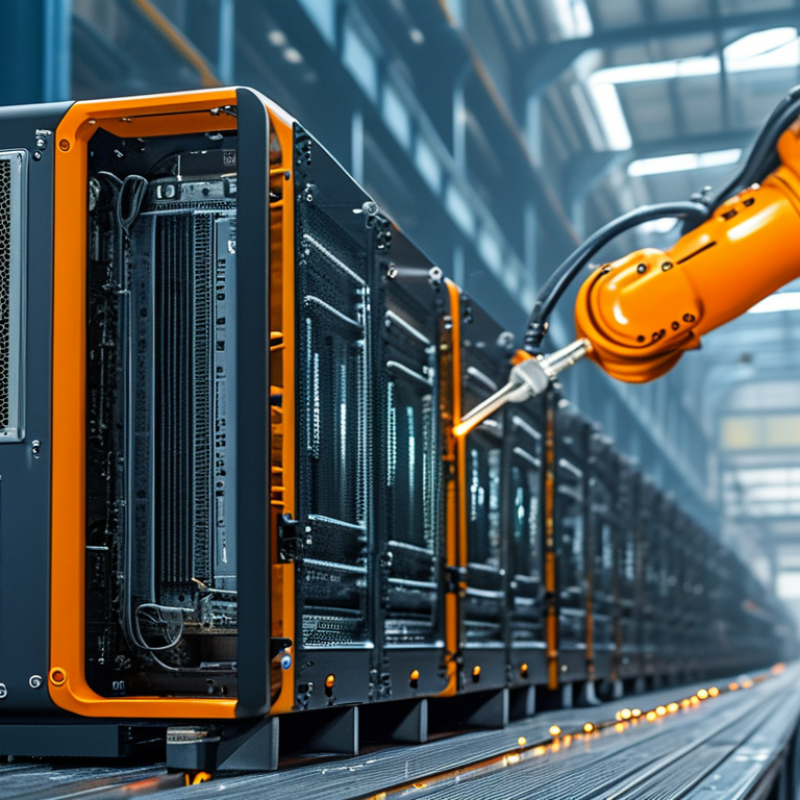
How to Choose an Industrial AI Server Manufacturer in 2026?

Industrial AI Server Fundamentals and Application Requirements

How to Choose an Industrial AI Server Manufacturer in 2026?

Industrial AI servers are built for continuous workloads, not occasional office computing. Their fundamentals include processing power, memory bandwidth, storage speed, network capacity, and thermal control. A practical configuration may combine CPUs for orchestration with accelerators for vision, forecasting, or anomaly detection. More accelerators are not always better. Power limits can reduce real-world performance.

Application requirements should guide every component. A camera inspection line may need low-latency inference, fast image storage, and stable connections to factory equipment. Predictive maintenance may require larger memory capacity for historical sensor data. Edge deployments need compact enclosures, dust protection, remote monitoring, and reliable operation near vibration or heat. Centralized systems may prioritize scalability and secure data transfer. In field assessments, teams often underestimate cooling space and maintenance access. That mistake becomes expensive after installation. Performance estimates also remain imperfect when software models change.

Tips: Define workload size, response time, operating temperature, expansion needs, and service expectations before comparing manufacturers. Request tested performance with your own models and data patterns. Check power consumption during sustained operation, not only peak benchmarks. Ask how firmware, drivers, replacement parts, and technical support are managed over several years. A clear lifecycle plan matters because industrial hardware rarely runs in ideal conditions.

Key Criteria for Evaluating Industrial AI Server Manufacturers

Choosing an industrial AI server manufacturer in 2026 requires more than comparing processor counts. The real test is operational fit: stable inference beside dust, vibration, heat, and uneven network links. Ask for measured results from workloads resembling your plant, not laboratory demos. Every claim should identify model, batch size, power draw, latency, and test temperature. Evidence matters.

Energy and reliability deserve equal weight. The International Energy Agency estimates that data centers consumed 240–340 TWh of electricity in 2022. Its Electricity 2024 report projects global data center demand could reach 620–1,050 TWh by 2026. An industrial supplier should document performance per watt, cooling design, acoustic limits, and failure recovery. Request three-year spare-parts availability and a named escalation path. Uptime Institute’s 2024 Global Data Center Survey identified power-related incidents as a leading outage cause. This makes redundant power inputs, graceful shutdown, and local service engineers practical criteria. Ask for proof.

Security and lifecycle support can separate a durable platform from an expensive experiment. Ask whether firmware bills of materials, signed updates, vulnerability response times, and offline patch procedures are documented. The OECD’s 2024 AI Outlook stresses trustworthy, secure, and accountable AI deployment. Server governance should match that expectation. Check integration with existing PLC, historian, and container environments. A five-year roadmap sounds reassuring, but it is not proof. I would request a paid pilot, inspect logs after thermal cycling, and interview two current users. Their answers may be less polished, which is useful. The cheapest chassis can become the costliest stoppage.

Comparing Hardware Performance, Reliability, and Expandability

How to Choose an Industrial AI Server Manufacturer in 2026?

Choosing an industrial AI server manufacturer requires more than comparing processor names. In factory deployments, performance means stable inference under heat, vibration, and continuous workloads. Ask for measured results with your models, not only laboratory benchmarks. A server processing inspection images should maintain predictable latency during peak production hours. Check GPU memory, storage speed, network bandwidth, and support for current AI frameworks. Small differences become expensive when thousands of images arrive every minute.

Reliability must be tested in realistic conditions. Review thermal design, power protection, component quality, and remote monitoring features. Request failure-rate data and clear repair procedures. A useful evaluation includes burn-in testing, unexpected restart tests, and operation near the site’s highest temperature. Keep spare components available. Downtime is rarely theoretical. However, published reliability figures can hide important details, such as workload type or maintenance frequency. Read the assumptions carefully.

Expandability protects an investment when models and production lines change. Look for accessible PCIe slots, extra drive bays, flexible memory capacity, and sufficient power headroom. Confirm that future accelerators will fit physically and thermally. Rack depth matters more than many teams expect. I have seen expansion plans fail because cables blocked airflow. That mistake is avoidable, but not uncommon. Also examine firmware policies and long-term technical support. A cheaper server may perform well today, yet limit storage or accelerator upgrades within two years. The better choice leaves practical room for change, even if the initial configuration seems oversized.

How to Choose an Industrial AI Server Manufacturer in 2026?

Comparing hardware performance, reliability, and expandability through an anonymized industrial server-class reference index.

The index uses a 0–100 scale to compare representative industrial server classes without identifying any manufacturer or brand. Hardware performance considers accelerator capacity, memory bandwidth, and networking; reliability reflects continuous-operation design, thermal management, and serviceability; expandability covers PCIe slots, GPU support, storage bays, and industrial I/O options. Higher scores indicate stronger suitability for demanding 24/7 AI workloads.

Assessing Software Compatibility, Security, and Technical Support

How to Choose an Industrial AI Server Manufacturer in 2026?

Choosing an industrial AI server manufacturer in 2026 requires more than comparing processor counts. Software compatibility should be tested with the exact workload. Ask for validated drivers, container support, framework versions, and remote-management interfaces. A factory vision model may run well in a laboratory, then fail beside a noisy PLC. Request a hands-on pilot with your cameras, sensors, operating system, and deployment pipeline. This is practical evidence.

Security needs equal scrutiny. The 2024 Cost of a Data Breach Report recorded an average breach cost of 4.88 million dollars. That figure is not an industrial-server forecast, but it shows why weak access controls become expensive. Check secure boot, signed firmware, hardware-rooted identity, patch timelines, log export, and role-based administration. Ask how vulnerabilities are disclosed. NIST’s AI Risk Management Framework recommends documented governance, measurement, and ongoing monitoring. Do not accept vague claims like “enterprise-grade.” Good answer?

Technical support often determines whether an outage lasts minutes or an entire shift. Require 24/7 escalation, local spares, named engineers, response targets, and lifecycle commitments. The World Economic Forum’s Future of Jobs Report 2025 estimates that 39% of existing skill sets may change by 2030. Documentation and operator training therefore matter. Test support before signing: open a simulated ticket, request a firmware rollback plan, and measure the response. I would still ask one uncomfortable question: what happens after the warranty ends?

Selecting the Best Manufacturer Through Testing and Total Cost Analysis

Choosing an industrial AI server manufacturer in 2026 requires more than comparing processor names. Request a controlled trial using your actual workloads, cameras, sensors, and software stack. Measure inference latency, throughput, power draw, and recovery time under continuous operation. Test the whole system.

Run workloads in a warm, dusty cabinet if that reflects the factory environment. Record fan speed, thermal throttling, error logs, and network interruptions. A server that performs well for two hours may struggle after several days. Ask for documented validation methods, firmware controls, component traceability, and repair procedures. These details reveal practical engineering more clearly than a polished datasheet.

Total cost analysis should include purchase price, installation, electricity, cooling, licenses, maintenance, spare parts, and downtime. Calculate costs over three to five years. Our first estimate was wrong when we ignored technician travel and delayed replacement units. The numbers change. Compare warranty response times and local service capability, not just contract language. Request failure-rate data from comparable deployments, but examine how that data was collected. A low failure rate can hide excluded accessories or short test periods. Choose the manufacturer that can explain its test limits, admit uncertainty, and provide evidence for every major performance claim.

How to Choose an Industrial AI Server Manufacturer in 2026? — Selecting the Best Manufacturer Through Testing and Total Cost Analysis
Evaluation Dimension Recommended Test Method Objective Acceptance Benchmark Evidence to Request Typical 3-Year TCO Share Score Weight
AI Inference Performance Run the intended computer-vision, predictive-maintenance, or anomaly-detection workload using the final model, input resolution, batch size, and precision mode. At least 95% of the required throughput, with no more than 10% performance degradation during a continuous 4-hour run. Reproducible benchmark report, model version, software configuration, input profile, and power measurement. 25%–45% 20%
Latency and Determinism Measure end-to-end response time from sensor input to control or alert output under normal and peak workloads. Meet the application limit at the 95th percentile; for a 50 ms requirement, p95 latency should not exceed 50 ms and p99 should remain below 75 ms. Latency distribution, timestamp methodology, network configuration, and results under concurrent workloads. 5%–10% 12%
Reliability and Uptime Conduct a 72-hour burn-in test with representative compute, storage, networking, and environmental conditions. Zero critical hardware errors, zero unplanned reboots, and a documented availability target of at least 99.9% for production operation. Burn-in logs, error-correction records, failure-history policy, and uptime service-level terms. 5%–20% 15%
Thermal Stability Operate the system continuously at the intended load in the maximum specified ambient temperature and with the planned enclosure airflow. Sustained performance should remain at least 95% of the initial result, with no thermal shutdown or unplanned clock throttling. Thermal test curves, fan-control behavior, temperature limits, and airflow requirements. 5%–12% 8%
Power and Cooling Measure idle, typical, and peak power at the wall outlet during the final workload. Include facility cooling requirements. Measured peak power must remain within the site electrical design limit, with at least 15% spare capacity for normal variation and future expansion. Power readings, rack-power assumptions, cooling-load data, and recommended circuit capacity. 15%–30% 10%
Industrial Environmental Suitability Review operation in the planned temperature, humidity, dust, vibration, electromagnetic, and altitude conditions. All operating limits must cover the deployment site; sealed or filtered airflow should be used where dust exposure is material. Environmental specifications, ingress protection information where applicable, vibration test records, and installation requirements. 3%–10% 8%
Expansion and Lifecycle Verify available accelerator, memory, storage, network, and PCIe capacity against the three-year deployment roadmap. At least 20% spare capacity after initial deployment, with a documented five-year parts and firmware support plan. Expansion diagrams, component availability statement, firmware lifecycle policy, and upgrade compatibility matrix. 5%–15% 8%
Serviceability Perform a supervised replacement simulation for storage, power supplies, fans, memory, or other field-replaceable components. Routine component replacement should be possible without removing unrelated assemblies; target mean time to repair is four hours or less for stocked parts. Maintenance manual, spare-parts list, replacement procedures, and technician training requirements. 5%–15% 7%
Security and Manageability Test secure boot, firmware controls, role-based administration, audit logging, vulnerability response, and remote monitoring. Support authenticated administration, encrypted management access, signed firmware, centralized logs, and documented vulnerability remediation. Security architecture, update policy, bill of materials, access-control documentation, and incident-response process. 3%–8% 7%
Integration Compatibility Connect the server to the actual cameras, PLCs, sensors, industrial networks, storage systems, orchestration tools, and monitoring platform. All critical interfaces must operate without custom workarounds that create an unsupported production dependency. Compatibility matrix, driver versions, API documentation, network diagrams, and integration test results. 10%–25% 5%
Support and Warranty Evaluate response time, escalation procedure, on-site coverage, spare-part logistics, and support across the intended operating region. Critical incidents should have a defined response target of four hours or less, with clear replacement and escalation procedures. Warranty terms, service-level agreement, support coverage map, escalation contacts, and excluded conditions. 5%–15% 5%
Total Cost of Ownership Calculate acquisition, integration, software, energy, cooling, maintenance, spare parts, downtime exposure, and retirement costs over 36 months. Choose the solution with the lowest risk-adjusted TCO that also passes every mandatory technical test; do not select on purchase price alone. Three-year cost model, energy assumptions, support pricing, license terms, upgrade costs, and end-of-life policy. 100% of evaluated cost Overall Gate
Recommended decision rule: Reject any proposal that fails a mandatory safety, reliability, security, environmental, or integration requirement. Rank the remaining proposals using the weighted score and compare their risk-adjusted three-year TCO.
TCO calculation: Three-Year TCO = Acquisition Cost + Integration Cost + Software and Support Fees + Energy Cost + Cooling Cost + Maintenance and Spare Parts + Downtime Exposure − Residual Value. Monetary assumptions should be replaced with site-specific electricity rates, operating hours, labor costs, and service requirements before procurement.

FAQS

What performance evidence should an industrial AI server manufacturer provide?

Request measured results using your own inspection models. Laboratory benchmarks are not enough. Check latency during peak production hours.

Which hardware specifications matter for factory AI workloads?

Review accelerator memory, storage speed, network bandwidth, and framework support. Small differences matter when thousands of images arrive each minute.

How can server reliability be tested realistically?

Use burn-in tests, restart tests, and high-temperature operation. Check thermal design, power protection, and remote monitoring. Factory conditions can be unforgiving.

What failure and maintenance information should buyers request?

Ask for failure-rate data, repair procedures, and maintenance assumptions. Published figures may hide important details. Read the fine print carefully.

How does expandability protect an industrial server investment?

Look for accessible expansion slots, extra drive bays, flexible memory, and spare power capacity. Future accelerators must fit physically and thermally.

Why do rack dimensions and cable layout matter?

Rack depth affects installation and airflow. Cables can block cooling paths. I have seen expansion plans fail this way.

How should software compatibility be evaluated?

Run a hands-on pilot with your cameras, sensors, operating system, and deployment pipeline. Request validated drivers, containers, and framework versions. This is stronger evidence.

Which security features deserve close attention?

Check secure boot, signed firmware, hardware-based identity, patch timelines, exported logs, and role-based access. Avoid vague claims like “enterprise-grade.”

What technical support should be required before purchase?

Require 24/7 escalation, local spare parts, named engineers, response targets, and lifecycle commitments. Test support with a simulated ticket.

What uncomfortable question should buyers ask about long-term support?

Ask what happens after the warranty ends. Confirm firmware rollback procedures and continued documentation. The answer may reveal future costs.

Conclusion

Choosing the right industrial ai server manufacturer in 2026 requires more than comparing processing speed or purchase prices. Organizations should first define their AI workloads, including computer vision, predictive maintenance, robotics, and real-time analytics, then identify the required computing power, memory, storage, networking, and environmental resistance. Evaluation should cover hardware performance, system stability, thermal management, expandability, energy efficiency, and long-term reliability in demanding industrial settings.

Software compatibility is equally important. A suitable manufacturer should support the organization’s operating systems, AI frameworks, virtualization needs, security policies, remote management tools, and data protection requirements. Responsive technical support, clear warranty terms, spare-parts availability, and customization capabilities can significantly reduce operational risks. Before making a decision, companies should conduct practical testing with representative workloads and compare performance, reliability, maintenance, energy consumption, upgrade costs, and support expenses. A total cost analysis, rather than the initial quotation alone, will help identify the manufacturer that offers the strongest long-term value and the best fit for future industrial AI development.

Isabella

Isabella

Isabella is a dedicated marketing professional with a sharp focus on driving brand growth and engagement through strategic content creation. With an extensive background in digital marketing, she combines her passion for storytelling with her keen understanding of industry trends to deliver......