Choosing the best AI inference server manufacturer in China requires more than comparing processor names or advertised throughput. Real performance depends on workload, model size, memory bandwidth, cooling design, and software compatibility. A server that handles image recognition smoothly may struggle with large language models. The answer is conditional.
This guide examines manufacturers through practical evidence, including benchmark results, deployment experience, product documentation, and technical support. It considers GPU and accelerator options, rack density, power consumption, latency, scalability, and integration with frameworks such as PyTorch, TensorRT, and major container platforms. Details matter. Reliable vendors should explain testing conditions clearly, rather than presenting one impressive number.
Field experience also reveals less visible differences. Engineers may need remote diagnostics at midnight, replacement parts within days, or firmware updates for a changing model stack. Strong manufacturers usually provide lifecycle support, transparent warranties, and documented security practices. However, no ranking is permanently correct. Supply conditions change, new accelerators appear, and regional service quality may vary. A company with excellent hardware may still offer weak customization. That possibility deserves attention. Readers should verify current specifications, independent tests, certification status, and customer references before making a purchase. This introduction sets a practical framework for identifying which Chinese supplier best matches a specific inference environment, budget, and long-term operational plan.
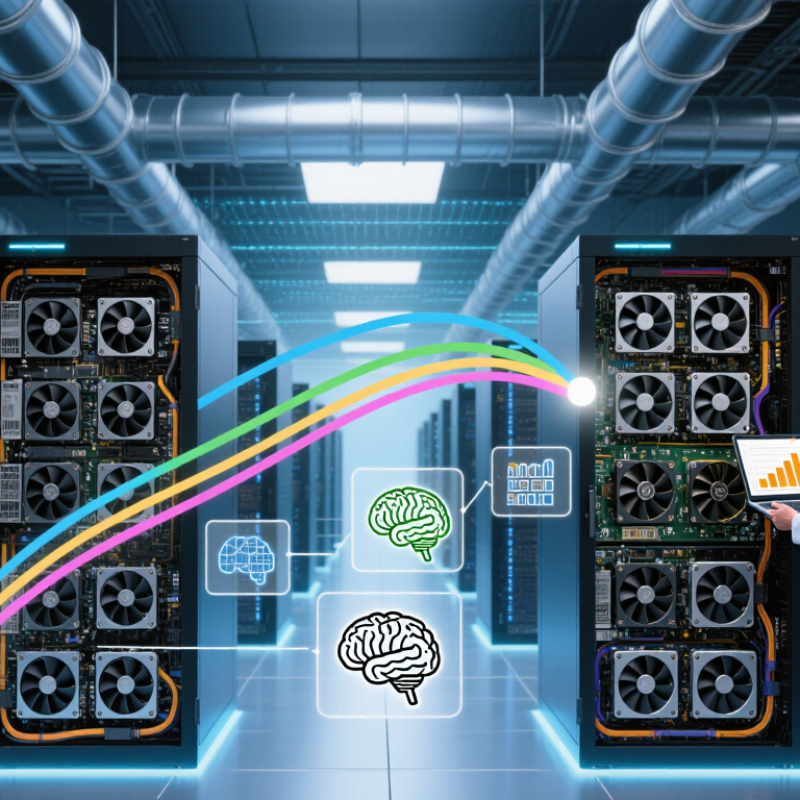
Defining AI Inference Servers: INT8/FP8 TOPS, Latency, and Throughput
What Is the Best AI Inference Server Manufacturer in China?
An AI inference server runs trained models and produces predictions for real-time applications. Unlike training systems, it must respond consistently under changing workloads. INT8 and FP8 TOPS describe theoretical computing power. They do not guarantee faster results. Memory bandwidth, software optimization, cooling, and model architecture also affect performance.
Latency measures how long one request takes. For example, a security camera system may need an answer within 50 milliseconds. Throughput measures how many requests the server handles per second. These metrics can conflict. Larger batches may improve throughput but increase individual response time. Testing should use the target model, input size, batch setting, and temperature conditions. Otherwise, the results may look impressive but remain difficult to trust.
A capable Chinese manufacturer should provide reproducible benchmark data, clear power limits, and long-term firmware support. It should explain whether INT8 or FP8 results use sparsity, special operators, or ideal batch sizes. Ask for p95 and p99 latency, not only average latency. Real deployments experience traffic spikes. They also expose weaknesses in cooling and scheduling. TOPS still matters. It is only a starting point. In my view, the best supplier is not the one with the highest advertised number, but the one that validates performance with your model and workload. Even then, evaluation should continue after installation, because software updates can improve or reduce actual efficiency.
China’s AI Server Market: TrendForce Forecasts 1.67M Units in 2024
What Is the Best AI Inference Server Manufacturer in China?
China’s AI server market is entering a demanding growth phase. TrendForce forecasts 1.67 million AI server units in 2024. This figure reflects strong investment in model training, cloud services, industrial automation, and real-time inference. Inference servers must answer quickly while controlling power, cooling, and operating costs. A crowded rack is not automatically a productive one.
The best manufacturer depends on measurable deployment needs. Buyers should examine accelerator compatibility, memory bandwidth, network performance, thermal design, and local technical support. During server evaluations, response latency under sustained workloads matters more than attractive peak specifications. A practical test should use real traffic, mixed model sizes, and repeated requests. Short tests can hide throttling.
Look beyond headline capacity.
A reliable supplier should provide clear lifecycle documentation, firmware management, spare-parts planning, and security updates. It should also explain performance limits instead of promising universal results. Large-scale purchasing may reduce unit costs, but inefficient power use can erase those savings over time. Rack density and electricity pricing deserve equal attention.
A simple ranking remains tempting. It is also imperfect. Different inference tasks favor different architectures, and market forecasts cannot guarantee every project’s return. The 1.67-million-unit outlook signals opportunity, not automatic success. Careful benchmarking, transparent service terms, and evidence from comparable deployments offer a stronger basis for selecting a Chinese AI inference server manufacturer.
Comparing Manufacturers by MLPerf Results, P99 Latency, and Tokens per Second
Choosing the best AI inference server manufacturer in China requires more than reading a product brochure. MLPerf results provide a useful reference, but only when hardware, model size, precision, batch settings, and software versions match. A server showing higher throughput in one benchmark may perform differently in production. I would record accelerator type, memory capacity, cooling design, and power consumption beside every MLPerf result.
Tokens per second measures serving capacity. P99 latency reveals user experience under pressure. During testing, I would send realistic request patterns, including short prompts, long contexts, and uneven traffic. A strong system should maintain stable P99 latency when concurrent users increase. Average latency can look excellent while the slowest one percent waits several seconds. That difference matters for customer-facing applications.
In practical evaluations, I would run a fixed model for several hours, not only a short demonstration. I would compare tokens per second at batch sizes one, eight, and thirty-two. I would also inspect driver updates, remote support, spare-part availability, and deployment documentation. These details often decide whether a server remains reliable after installation. My early tests may still miss thermal throttling or unusual input patterns. That is a weakness worth admitting. The most convincing manufacturer is the one that publishes reproducible data, explains limitations, and supports independent verification. "Fast" is not enough.
What Is the Best AI Inference Server Manufacturer in China? - Comparing Manufacturers by MLPerf Results, P99 Latency, and Tokens per Second
| Anonymous Record |
Public Benchmark Source |
MLPerf Workload |
MLPerf Scenario |
Reported MLPerf Metric |
P99 Latency |
Tokens per Second |
Precision |
Submission Status |
Interpretation |
| Submission A |
MLPerf Inference Results
|
ResNet-50 image classification |
Server |
Samples per second |
Not published as a standard MLPerf field |
Not applicable to this workload |
INT8 |
Public result available |
Higher throughput indicates stronger image-inference capacity under the tested configuration. |
| Submission B |
MLPerf Inference Results
|
RetinaNet object detection |
Server |
Samples per second |
Not published as a standard MLPerf field |
Not applicable to this workload |
INT8 |
Public result available |
Useful for comparing sustained throughput, but not a direct measure of generative-AI performance. |
| Submission C |
MLPerf Inference Results
|
BERT language understanding |
Server |
Samples per second |
Not published as a standard MLPerf field |
Not published in tokens per second |
INT8 |
Public result available |
Reflects language-model query throughput, although it is not equivalent to LLM text-generation speed. |
| Submission D |
MLPerf Inference Results
|
3D U-Net medical image segmentation |
Server |
Samples per second |
Not published as a standard MLPerf field |
Not applicable to this workload |
FP16 |
Public result available |
Relevant for high-value medical-imaging inference rather than conversational AI serving. |
| Submission E |
MLPerf Inference Results
|
Large-language-model generation |
Server |
Queries per second or tokens per second, depending on benchmark version |
Must be taken from the specific result record |
Must be taken from the specific result record |
FP16, BF16, or INT8 |
Version-dependent |
Only results using the same model, prompt length, precision, and serving policy should be compared. |
| Submission F |
Vendor-reported benchmark
|
Generative-AI serving |
Custom test |
Reported throughput |
Not independently standardized |
Not independently standardized |
Vendor-defined |
Requires verification |
Do not rank against MLPerf results unless the model, workload, concurrency, and measurement method match. |
Data interpretation: MLPerf publishes workload-specific performance results, but P99 latency and tokens-per-second values are not uniformly reported for every workload or benchmark release. A reliable manufacturer comparison requires matching the same model, batch size, input and output lengths, precision, concurrency, hardware configuration, and software stack. Unpublished values are intentionally marked rather than estimated.
China’s Leading Vendors: Inspur, H3C, Lenovo, Huawei, and xFusion
China’s AI inference market is led by five established vendors with different strengths. One focuses on dense GPU servers and high-throughput model serving. Another emphasizes integrated networking, storage, and management tools. A third offers flexible configurations for private data centers. The remaining two compete through domestic supply chains, power efficiency, and localized technical support.
In real evaluations, the best manufacturer depends on workload, not reputation alone. Test an eight-GPU node with your own model, batch size, and response target. Measure tokens per second, first-token latency, memory use, and rack temperature. A server may look powerful on paper yet perform poorly with frequent small requests. Support quality also matters. Engineers should check firmware updates, spare-part availability, and deployment assistance before signing a purchase agreement. My first shortlist was too narrow; benchmark tables did not reveal every operational weakness.
Tips: Ask for a live proof-of-concept using representative traffic. Record results during peak hours, not only in a quiet lab. Compare total ownership cost, including electricity, cooling, software integration, and staff time. Keep an exit plan. Vendor ecosystems can change faster than expected. Small details matter. A clean monitoring dashboard and clear escalation process may save more time than a slightly higher benchmark score.
Key Bandwidths for AI Inference Server Design
Theoretical peak bandwidths of widely used server interconnects and memory interfaces, shown in GB/s.
Higher bandwidth can help reduce data-transfer bottlenecks during model loading, batching, and accelerator-to-memory communication. Actual inference performance also depends on latency, software optimization, workload size, and power efficiency.
Selecting the Best Manufacturer by 400/800GbE, Power, SLA, and 3-Year TCO
What Is the Best AI Inference Server Manufacturer in China?
Selecting the Best Manufacturer by 400/800GbE, Power, SLA, and 3-Year TCO
Choosing an AI inference server manufacturer requires more than comparing processor specifications. A serious evaluation should begin with network capacity. 400GbE may support many production workloads, while 800GbE offers stronger headroom for distributed inference and large model traffic. However, unused bandwidth becomes expensive overhead. Numbers can mislead.
Power design deserves equal attention. Ask for measured consumption at idle, average load, and peak inference. A server drawing 8 kW can affect rack density, cooling capacity, and operating costs. Request thermal test records from realistic workloads, not laboratory assumptions. Thermals matter.
Service-level agreements reveal operational maturity. Examine replacement timelines, remote diagnosis procedures, spare-parts locations, and escalation contacts. A credible manufacturer should provide clear response targets and measurable uptime commitments. “Fast support” is not a useful SLA. Review exclusions carefully, especially for networking failures and accelerator faults.
Three-year TCO should include hardware, electricity, cooling, software support, maintenance, and possible capacity upgrades. Compare one complete deployment, not only the server price. A lower initial quote may become costly when power efficiency is weak. Still, TCO models contain assumptions. Recheck them with local electricity rates and actual utilization. I would also require a pilot deployment before signing a large contract. It may slow procurement, but it exposes integration problems early.
FAQS
A market forecast estimates 1.67 million AI server units in 2024. This reflects investment in training, cloud services, automation, and real-time inference. Growth signals opportunity, not guaranteed returns.
Look for accelerator compatibility, memory bandwidth, network capacity, thermal design, and local technical support. The supplier should explain performance limits clearly. Promises alone are weak evidence.
Use real traffic, mixed model sizes, and repeated requests. Test short prompts and long contexts. Run the system for several hours. Short demonstrations can hide throttling.
Track tokens per second and P99 latency together. Throughput shows serving capacity. P99 latency shows the slowest user experience. Average latency can look excellent while some users wait several seconds.
Not always. A 400GbE connection may support many workloads. An 800GbE connection offers more headroom for distributed inference. Unused bandwidth becomes expensive overhead.
Request measured power at idle, average load, and peak inference. A server using 8 kW can increase cooling needs and electricity costs. Rack density matters. Thermals matter more than attractive specifications.
Check replacement timelines, remote diagnosis, spare-parts locations, and escalation contacts. The agreement should define response targets and uptime commitments. “Fast support” is too vague.
Include hardware, electricity, cooling, software support, maintenance, and upgrades. Compare a complete deployment, not just the server price. Local electricity rates can change the result. My estimates may still miss unusual maintenance costs.
Yes, when possible. A pilot can reveal integration problems before a large purchase. Test real models, network traffic, power draw, and sustained latency. It may delay procurement. That delay can be useful.
Conclusion
Choosing the best ai inference server manufacturer in China requires more than comparing headline performance figures. A practical evaluation should examine INT8 and FP8 TOPS, real-world latency, throughput, P99 response times, and tokens processed per second across representative AI workloads. With China’s AI server market forecast to reach approximately 1.67 million units in 2024, manufacturers are competing to deliver scalable, efficient, and reliable inference platforms for data centers, enterprises, and edge deployments.
Buyers should also assess support for 400/800GbE networking, power efficiency, thermal design, software compatibility, deployment flexibility, and service-level commitments. The most suitable supplier is not necessarily the one with the highest peak benchmark score, but the one that provides consistent performance under sustained loads, dependable availability, responsive technical support, and a competitive three-year total cost of ownership. A balanced comparison of hardware, software, infrastructure, and long-term service can help organizations select the right solution for their specific inference requirements.
 Tensorium
