Tensorium
In 2026, choosing a data center AI server manufacturer is more than a hardware decision. It affects model-training speed, inference capacity, power use, and day-to-day maintenance. A single rack may combine accelerators, high-speed networking, liquid cooling, and carefully tuned software. The details matter.
NVIDIA founder and CEO Jensen Huang has described the broader shift this way: “The data center is the new unit of computing.” His observation highlights why buyers now assess complete systems, not just individual servers. They need to consider accelerator options, rack density, cooling design, power requirements, software support, and the manufacturer’s ability to deliver and service equipment. A strong specification sheet is useful. It is not enough.
This guide compares leading manufacturers through those practical considerations, including how their systems fit different workloads and facility constraints. It also distinguishes published specifications from claims that require customer-specific validation. Availability and configurations can change, and performance depends on the full deployment—not the server alone. No ranking is perfect. Readers should use the comparisons as a starting point, then confirm compatibility, service coverage, and operating costs with vendors. That extra checking can feel tedious, but it may reveal trade-offs that a polished product page leaves out.
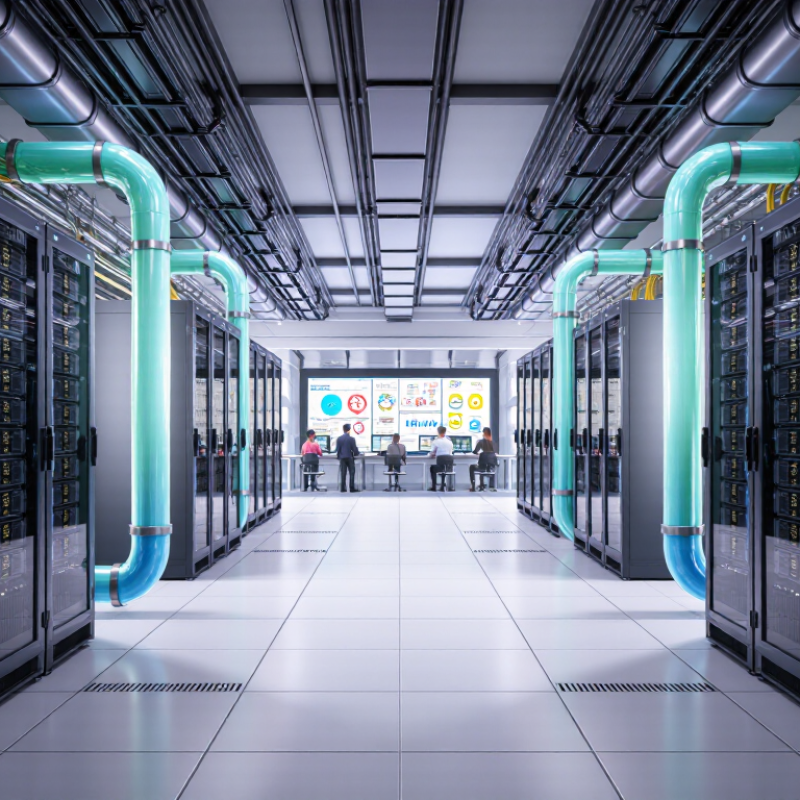
A data center AI server manufacturer does more than assemble powerful processors. It designs complete systems for sustained, measurable workloads. That includes accelerators, memory, networking, storage, cooling, and power delivery. Each component must work reliably under continuous computational pressure. In practice, engineers test systems with model training, inference, and mixed enterprise workloads. A specification sheet is only the beginning.
Thermal design now separates serious manufacturers from ordinary equipment suppliers. Engineers must manage hot spots, airflow resistance, liquid cooling options, and rack-level energy limits. A reliable system should report temperature, power draw, and component health in real time. Firmware updates must be controlled, documented, and reversible. Security also matters, from hardware identity to protected management access. Small oversights can become expensive failures.
Experience appears during deployment, not during a showroom demonstration. Manufacturers should provide clear validation records, service procedures, replacement planning, and predictable support. They should explain performance using repeatable tests rather than attractive peak numbers. Independent certifications and transparent compliance evidence strengthen trust. Still, no platform is perfect. Cooling assumptions may fail in an older facility. Software compatibility can expose unexpected delays. A credible manufacturer admits these risks and helps customers measure them before installation. That honesty is part of technical authority.
Evaluating the top data center AI server manufacturers in 2026 requires more than comparing processor counts. A credible ranking begins with verified performance under real workloads. Testers should measure training speed, inference latency, memory bandwidth, and power use. Results must come from repeatable tests. One impressive demonstration is not enough.
Hardware reliability also carries significant weight. Evaluators can review failure rates, thermal behavior, firmware updates, and component replacement times. A server running quietly at 24°C may behave differently inside a crowded rack. Cooling design matters. So does energy efficiency.
Rankings should compare performance per watt, rack density, networking capacity, and total ownership costs across several deployment sizes.
Professional buyers should examine technical documentation and independent customer evidence. Support response times, spare-parts availability, system integration, and security practices reveal operational maturity. Transparent manufacturers publish test conditions, limitations, and compatibility details. Still, no ranking is perfectly objective. Public benchmarks may favor certain workloads, while private test data can be difficult to verify. A system optimized for language-model inference may perform poorly in scientific simulation. Evaluators should disclose these gaps instead of hiding them behind a single score. Personal experience from installation teams also helps, although it can introduce bias. Clear methods and honest caveats make the ranking more useful.
Which Companies Lead the 2026 Data Center AI Server Market?
The 2026 leaders will be manufacturers that combine accelerated computing, liquid cooling, and dependable global support. TrendForce projected AI server shipments to grow about 28% year over year in 2025. That expansion raises the bar. Buyers now assess rack density, power efficiency, memory capacity, and delivery stability—not only processor speed.
IDC’s Worldwide AI and Generative AI Spending Guide projects global AI spending to reach about $632 billion by 2028. This forecast supports strong demand for high-density servers, but it does not guarantee equal growth for every supplier. The strongest manufacturers are likely to include established enterprise server producers, specialist accelerated-computing builders, and regional integrators with flexible factory capacity. Companies with validated liquid-cooling designs may gain an advantage. Cooling is no longer a minor specification.
Omdia’s research also highlights rapid expansion in AI infrastructure investment, especially for training and inference workloads. In practice, leading suppliers must prove performance under sustained workloads, not just publish benchmark results. Buyers should examine failure rates, firmware updates, service response times, and lifecycle costs. Some market rankings still rely heavily on shipment value. That can be misleading. A cheaper system may consume more electricity and require more maintenance. The difficult question is not who ships the most servers, but who delivers reliable computing capacity at an acceptable total cost.
| Manufacturer Capability Area | Typical System Design | Relevant Market Context | Deployment Strength | Key Considerations |
|---|---|---|---|---|
| Accelerator server manufacturers | Rack-mounted servers configured with multiple accelerator cards, commonly using PCIe connectivity and high-bandwidth accelerator interconnects. | Systems with four or eight accelerators are common configurations, although the supported count varies by platform and chassis. | Suitable for model training, inference, and other parallel workloads that benefit from accelerator compute. | Power delivery, cooling capacity, memory capacity, and interconnect bandwidth can limit the usable performance of a configuration. |
| Rack-scale system manufacturers | Integrated assemblies combining compute servers, networking, power distribution, and rack-level thermal design. | Large AI deployments often require coordinated planning across servers, network fabrics, power, and cooling rather than standalone server selection. | Can simplify installation and scaling for data centers deploying clusters of accelerator servers. | Requires sufficient rack space, facility power, cooling infrastructure, and compatibility across system components. |
| Liquid-cooling specialists | Servers or racks designed for direct-to-chip liquid cooling or other liquid-based heat-removal systems. | Air cooling remains widely used; liquid cooling is an established option for high-density deployments where heat removal is more challenging. | Can support higher heat-removal requirements and help manage thermal conditions in dense compute environments. | Deployment planning must account for facility-water systems, coolant distribution, maintenance procedures, and leak-management practices. |
| General-purpose server manufacturers with AI configurations | Flexible server platforms that combine CPUs, accelerator options, DDR5 system memory, and NVMe storage. | AI infrastructure commonly uses CPUs to coordinate workloads alongside accelerators; system memory and local storage requirements vary by workload. | Offers configuration flexibility for inference, data preparation, and mixed enterprise workloads. | Performance depends on balanced CPU, memory, storage, accelerator, and network resources—not accelerator count alone. |
| Network-integrated system manufacturers | Compute platforms designed to connect through high-speed Ethernet or specialized low-latency cluster fabrics. | Distributed training and large-scale inference depend on communication between servers as well as on individual server performance. | Useful for building multi-server clusters and scaling workloads across racks. | Network topology, congestion management, cabling, and fabric configuration affect cluster efficiency. |
| Custom and regional server manufacturers | Configured systems tailored to local compliance requirements, data-center constraints, or specific workload needs. | Server specifications and available configurations vary by market, supply chain, and customer requirements. | May provide regional integration, local support, and customization of memory, storage, networking, or cooling. | Evaluate component availability, firmware lifecycle, service coverage, and validated compatibility for each configuration. |
Reading note: This is a technology and capability comparison, not a ranked company list or market-share estimate. Configurations and performance vary by platform and workload.
Data center AI servers differ less by headline accelerator counts than by how their parts work together. Leading manufacturers make distinct choices in accelerator type, host-processor balance, memory capacity, and high-speed fabric. A system with many accelerators may still underperform if data cannot reach them quickly. Check memory bandwidth, network adapters, and the topology linking accelerators across nodes. Small details matter. A poorly matched fabric can leave expensive compute idle during distributed training. Cooling design also separates platforms: direct-to-chip liquid cooling supports dense racks, while air cooling may simplify service in lower-density rooms. Power delivery, rack weight, and facility water capacity should match the site.
System maturity matters just as much as hardware. Manufacturers differ in firmware integration, telemetry, and compatibility with workload-management software. No spec sheet settles this. Request measured performance for target workloads, including utilization, power draw, and failure recovery. Test inference latency as well as training throughput. Still, gaps remain. Published benchmarks rarely reproduce a buyer’s data, network congestion, or cooling conditions, so treat them as clues rather than guarantees. A pilot rack using real workload traces can reveal operational issues. Check how technicians replace a failed accelerator without disrupting neighboring nodes.
AI server manufacturing in 2026 is moving beyond faster processors. Power density now shapes the entire rack design. A single cabinet may require liquid cooling, stronger cable paths, and careful airflow planning. Manufacturers are also building modular systems for training and inference workloads. This approach helps data centers replace failed components without removing a full rack. It also reduces service delays.
Energy efficiency is becoming a purchasing requirement, not a marketing phrase. Engineers are measuring performance per watt, cooling demand, and workload stability under sustained pressure. Supply chain resilience matters too. Regional production, dual-source components, and stricter inspection processes can reduce unexpected interruptions. Security is gaining attention at the factory level. Firmware checks, traceable components, and controlled updates support more reliable deployments. Still, efficiency claims can be difficult to compare. Testing conditions are rarely identical, and some published figures feel too optimistic.
Tips: Ask manufacturers for measured power data, thermal test conditions, and repair timelines. Check whether cooling systems fit your existing facility. Review component availability before signing a large order. Small details matter. Also, question the word “scalable.” A server may support more accelerators but still face limits in power, networking, or floor space. I would leave room for uncertainty, because workload patterns can change faster than hardware plans.
Rising data-center electricity demand is increasing pressure to build higher-density, more power-efficient AI servers.
The 2026 bar shows the midpoint of the IEA projection range of 620–1,050 TWh. Higher demand is accelerating interest in liquid cooling, improved power delivery, and modular server designs. Source: IEA, Electricity 2024.
Established server makers, specialist accelerated-computing builders, and regional integrators are likely contenders. No single group is certain to dominate.
AI infrastructure spending is growing, while training and inference workloads need more computing capacity. One forecast expects shipments to rise about 28% in 2025. Forecasts are not guarantees.
Check rack density, memory capacity, power use, delivery reliability, and service support. A fast processor alone tells little.
Dense racks produce substantial heat. Liquid cooling can help manage it, but systems must fit the facility’s design. Cooling matters.
Ask for measured power use, cooling requirements, and test conditions. Compare results under similar workloads. Published figures can look too optimistic.
Modular systems can let technicians replace a failed component without removing a whole rack. That may reduce service delays. Not always.
Review regional production, alternative component sources, inspection procedures, and component availability. Ask for realistic delivery estimates before placing a large order.
More accelerators may not solve limits in power, networking, or floor space. Ask how the system performs in your facility, not just on paper.
Consider electricity costs, maintenance needs, failure rates, firmware updates, and response times. I would not trust one benchmark as a final verdict.
In 2026, a data center ai server manufacturer is defined by more than its ability to supply powerful hardware. Leading manufacturers combine accelerators, processors, memory, networking, cooling, and system management into reliable platforms designed for demanding AI workloads. Evaluating these companies requires looking at compute performance, scalability, energy efficiency, system integration, supply resilience, and the support available throughout deployment and operation.
The market’s leading manufacturers take different approaches to balancing performance, flexibility, and operational simplicity. Their systems may vary in accelerator configuration, cooling design, networking architecture, and options for customization. As AI workloads continue to grow, manufacturers are focusing on higher-density systems, improved power efficiency, liquid cooling, and easier integration with data center infrastructure. These developments will shape how organizations select and deploy AI servers in 2026.
